The best How to Write a Synopsis I’ve ever read is written by Autumn Bauman. I pull this up whenever I need to write the dreaded synopsis.
Life is a series of stories.
The best How to Write a Synopsis I’ve ever read is written by Autumn Bauman. I pull this up whenever I need to write the dreaded synopsis.

Writing is rewriting. This is something you may not understand as a beginning writer. I wrote for years without ever editing a word. I even turned off the red line in Word that indicated a word was misspelled, so I wouldn’t lose my train of thought. Nothing stopped me from getting the first draft on paper. This isn’t a bad thing, but you don’t get into the meat of writing until you start the second draft.
Writing instruments: pencil or pen and paper, typewriter, Word, Google Docs, Scrivener, and many more. I don’t know why anyone would use a typewriter when you could be entering all those words into a program like Word, but some people do. I used to write by hand until I had to rewrite every word, and my hand cramped so bad I could barely hold a pen. The sweet writing instruments are computer programs. Word is the standard for the writing industry. I prefer to stick with it for this reason. A lot of people like to use Google Docs because it’s free and they can type on their phone. Scrivener has a lot of fun tools that help you organize your files, and you can view more than one at a time. I see the appeal. There are many others, but I don’t hear their names in the writing community, so I’m not going to list them.
You can’t rewrite until you write. So, step one: are you going to plot your story or pants it? I started as a pantser and now I’m somewhere in between. Plotters plot out the story, generally using an outline. Pantsers write by the seat of their pants. Oftentimes, they have no idea where the story is going or what will happen next. I think you can get a better plot from plotting, but it’s easier to write a beautiful story when you pants. This is why I like to do a combination of both.
Now that you have your outline or general idea, begin writing. A lot of people write a lot of exposition at the beginning of a story. This is you telling yourself the background, and it is fine in your first draft, but it should be taken out at some point. I’ve heard that you should start the story as close to the end as possible, and I think this is truly great advice. The key is figuring out how close to the end you can begin and still tell the whole story. Write your messy first draft.
But wait! What about character sheets? A story is transformation, and often it’s the transformation of your protagonist. Not always, but often. Characters are defined by their actions, not their biography, but understanding the kind of character you’re dealing with helps by getting to know who your protagonist is at the beginning and who they are by the end. Those character traits should help or hurt your character along the way. Unique character traits are essential for the protagonist and the other characters. Too often, I read a book where each person is a clone of everyone else, to the point that I can’t tell them apart. I DNF those books. Your characters make the story, so make interesting characters.
You have your first draft; now, how do you edit it? There are several different types of edits. As far as I’m concerned, you can do a billion different kinds of edits. They say ignore proofreading until the end, but I have a hard time concentrating on the other issues with spelling and grammar issues taunting me. The order you edit is up to you. Developmental edits look for major issues of the story and plot: are there plot holes (I call this cohesive edit), how’s the pacing, is it engaging? Are the characters well-developed and believable? Will the reader care about them? How’s the overall structure and flow? I like to do a dialogue edit to make sure the dialogue matches the character. I tend to skip the scene and have to ground my characters, literally, where are they? You may have to do a fact-checking pass. Line editing focuses on your word choice, syntax, tone, and structure. The listening edit should never be skipped. Read your work aloud, or, better yet, have it read to you. Some books may require a sensitivity reader. Finish with proofreading and then proofread it again.
You think you’re done. Get a beta reader, or an alpha or ARC. An alpha reader will look at the first or an early draft. They expect something messy. The beta reader should receive your first “I think I’m done” draft. Hint: you are not done. ARC readers are receiving your “I’m on the verge of publishing” copy. This copy shouldn’t have any errors, but hopefully they’ll catch them if there are any. These are also the people who will hopefully provide your first reviews.
But my first draft is a hot mess, and I don’t know how to fix anything, or I’m just stuck and can’t even finish a first draft. Yeah. We’ve all been there. Let’s go over stories. To be continued…

Here is a list of my favorite YouTube writing accounts.
First, Brandon Sanderson‘s has his college lecture series. My favorite is actually his guest lecture on short stories. It is super scalable to full novels.
Next, The Second Story by Hilary Layne. There are times when you listen to someone and you just know they understand the subject matter. Hilary is one of those people. Modern Writers Can’t Write was my introduction to her and it should be yours as well.
I’m slowly making my way through David Perell’s videos. I learn something new or spark a new writing thought with each one.

Small towns lose their most important resources one by one. People. It happens in many ways. The children leave first. Small towns lack the number of youths to justify a school. If education was the principal point, communities could hold onto the little ones. A one or two-room schoolhouse isn’t the most absurd concept.
But in today’s society, we tend to combine these small towns for the sake of sports. There are additional benefits as well: art, foreign language, band, music, and other electives. The problem is that those little children build a loyalty to the town where they receive their education. It moves them one step away from their hometown.
The pull of education takes the little ones farther away after graduation. The brightest or most ambitious head off to university and trade school. They get a taste of what these larger towns can offer, things like a variety of foods, coffee shops, part-time jobs, shopping, and a greater sense of belonging: a larger community.
Next stop in life: full-time employment. College-bound or not, these young adults will need full-time jobs once they complete their formal education. Where do they go to find these jobs? The big city. Some obtain a position within their original small town, some in the place where they went to school, but most head off to a big city or even a metropolis.
The larger the city, the more expensive the cost of living. The higher the wage you can make, the more likely you will be able to pay off their debt. The best and the brightest leave their small town unless they can carve out a niche business that allows them to stay. And another small town grows smaller. Debt-strapped individuals often push off having children, which lowers the birth rate, creating a stagnant or reduced population, a whole other issue.
Other things have also contributed to the downfall of the small town. When the trains stopped coming, so did commerce and relevance for many remote little towns. Being on the train line didn’t matter anymore. Your position on the interstate made or broke your little town. The highway could save you. Two-lane paved highways make transporting goods and people way easier. A good road can help keep a small town alive if the route is optimal.
What else kills a small town? The death of industry. A town can thrive with a single manufacturing business. When those businesses moved offshore, it destroyed so many small towns. Sometimes, the old business won’t sell the building and land, hindering a new business from taking over. But most of the time, there isn’t another business willing to open up in the middle of nowhere.
The lack of residence in a small town prevents businesses from even considering those towns. Who wants to start a business in a tiny community where the bar is the only other business besides a church? Who wants to move to a small town when the nearest shopping center is half an hour away?
So, how can small towns be revitalized? Recruiting and investment. There are three main recruitment tools for the isolated small town. First, the internet provides a new road for commerce. If someone can work from home, they don’t need to live near the big city. Remote work means individuals can move out of the city and into a small town. Second, find an individual with an idea and invest as long as they establish the business in a small town. Some business ideas will work better than others since some businesses require foot traffic to survive. Third, convince an existing business to open a facility in the small town.
The people will desire accommodations, and businesses need consumers and employees. Recruiters will need to entice people to move into these small towns. To bring in the people, you need houses, a restaurant, a grocery store, shops, social clubs, etc. To build these, you will need capital investments.
How can we revitalize small-town America? By actively courting businesses and people and then investing in what those businesses and people need to thrive.
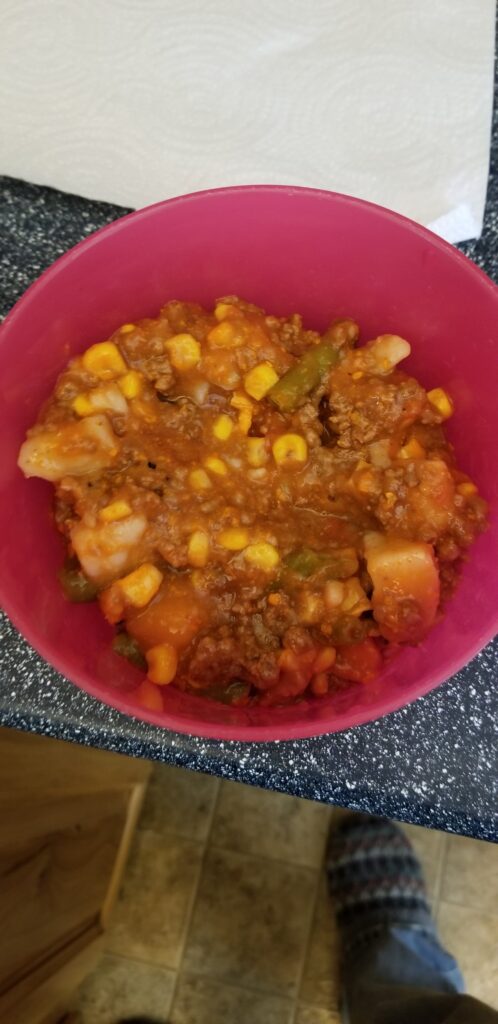
Hamburger
Cubed potatoes
Stewed tomatoes
Tomatoe sauce
Corn
Green beans
Carrot
Salt
Pepper
Brown hamburger, add all to instant pot. Drain corn and green beans.
Cook 40 minutes.
Gather the following ingredients:
Chicken
Cup of water
Seasoning
Use the rack in the instant pot
Place chicken on the rack. Do not put more in than the line at the top
Add a liquid. I add water up to the bottom of the rack. You can use chicken broth or Crockery Gourmet for chicken mix which will also make gravy.
Season the chicken as you like. If you used water you can pour vinaigrette like salad dressings over the chicken to add flaver.
If frozen cook for about 40 minutes. If thawed it should only take 15- 20 minutes.
Put the lid on and set to seal. Hit manual and set the time. Walk away.
When it is done cooking the timer will count up. You can vent the steam, do not put hand over steam. You can open when the steam has fully released.
If it is bone in chicken it may fall apart.
Serve.

Gather the following ingredients:
Can of black beans drained
Can of whole kernel corn (no salt is the best) drained
Cherry tomatoes
Red onion (optional)
Salt and fresh pepper
Olive oil
Drain the black beans and rinse in a colander, put in bowl
Drain corn and add to bowl
Cut cherry tomatoes in half and add to bowl
Chop red onion and add to bowl
Add salt (salt is optional) and pepper, lots of pepper
Drizzle olive oil over everything and stir
Serve
Gather the following ingredients:
Cubed ham
15 bean mix – cajun is best even if you don’t use the seasoning
7-8 cups of water
Add all of the ingredients to the pot – you do not need the rack
Put on lid and set venting to seal
Hit manual and set time to 1hr 45 minutes – walk away
When the time has ended the instant pot will count up.
When ready to eat set the top to vent, do not put hand over steam. Once fully vented you can open the lid.
Taste a bean to make sure it is done. If not fully cooked cook for another 15 minutes. It should look more like soup then water and beans when it is ready.
Serve
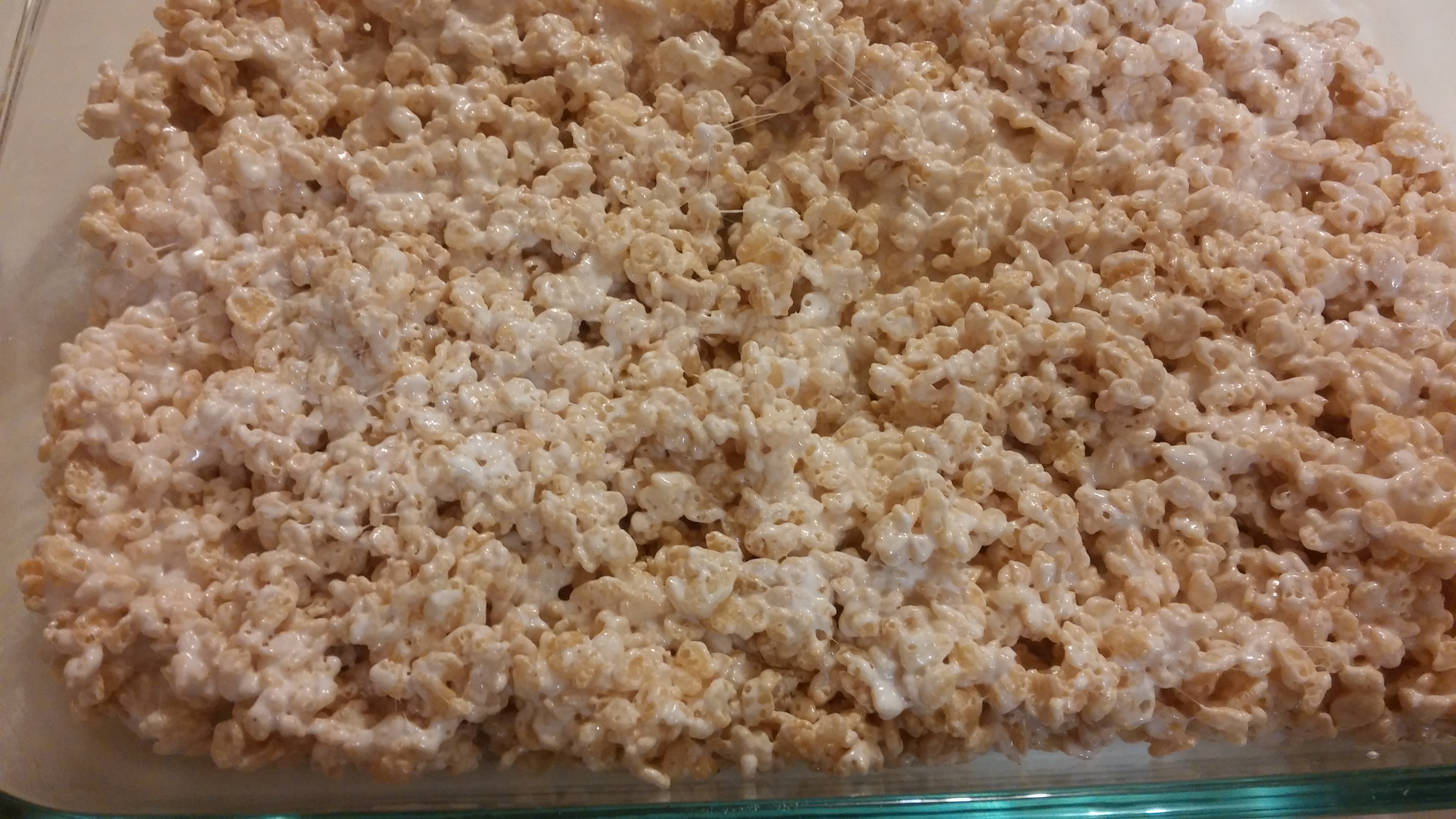
Rice Krispies Treats are a simple and perfect dessert. Be careful, one person could easily eat half a pan. You can find the recipe on the box and it is super easy to make.
Gather the following ingredients:
3 tablespoons of butter
1 package of marshmallows
6 cups of Kellogg’s Rice Krispies
A large Pot
A large glass pan
Non-stick cooking spray
Melt the butter in the pot. Add the marshmallows and melt them on a low heat stirring continuously until completely melted.
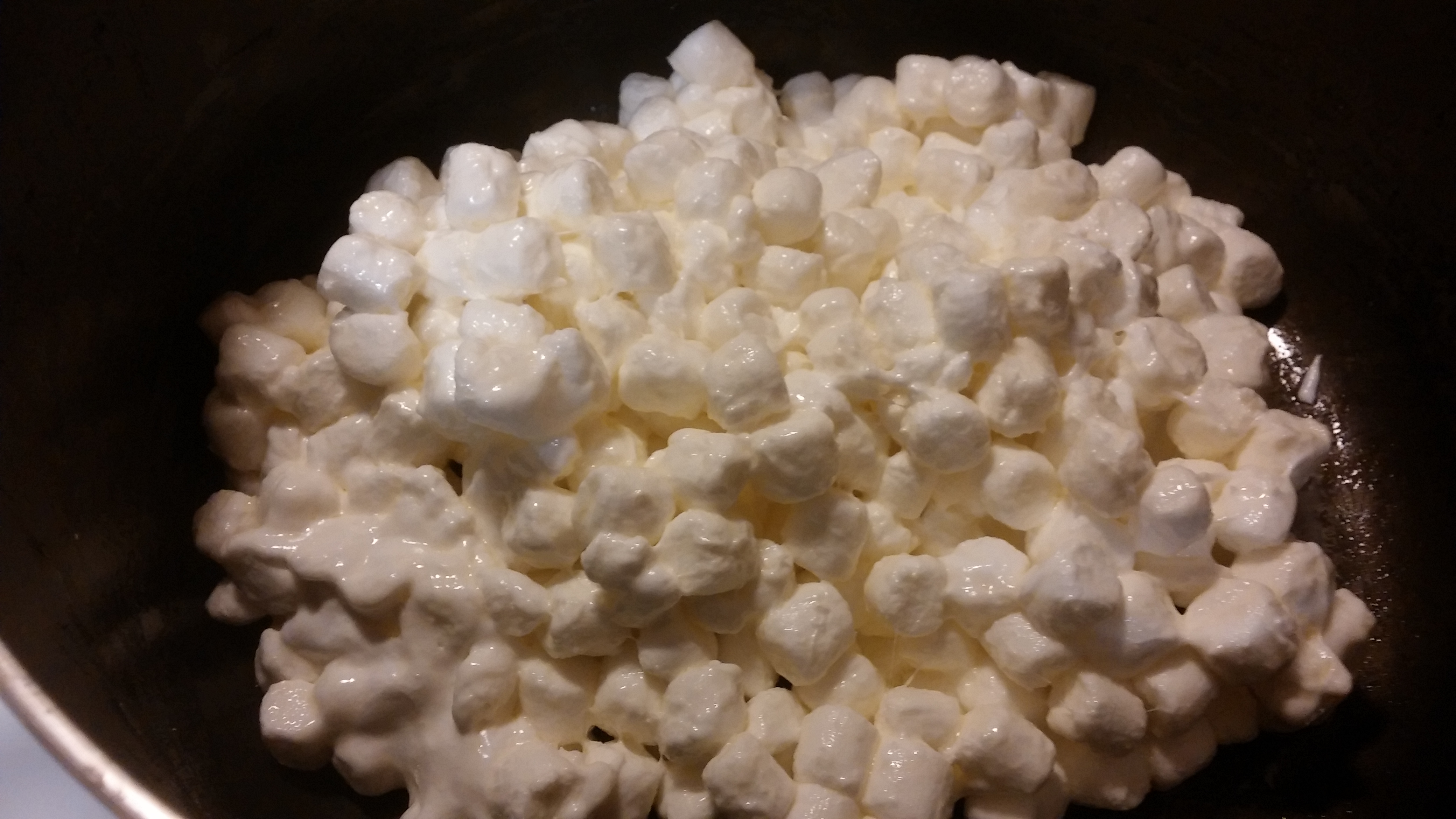
Remove the pot from the heat and add the Rice Krispies. I like to measure them into the glass pan so that I can pour them all in at once. It is a bit less than a small box. Stir until the Rice Krispies are coated.
Quickly spray down the glass pan with non-stick cooking spray.
Pour the marshmallows and Rice Krispies into the glass pan and flatten the top with your stirring device. Allow them to cool.
Cut and serve. Once they are cool you can wrap them in Saran wrap. If you do it when they are warm it will stick to it. Same thing with parchment paper.
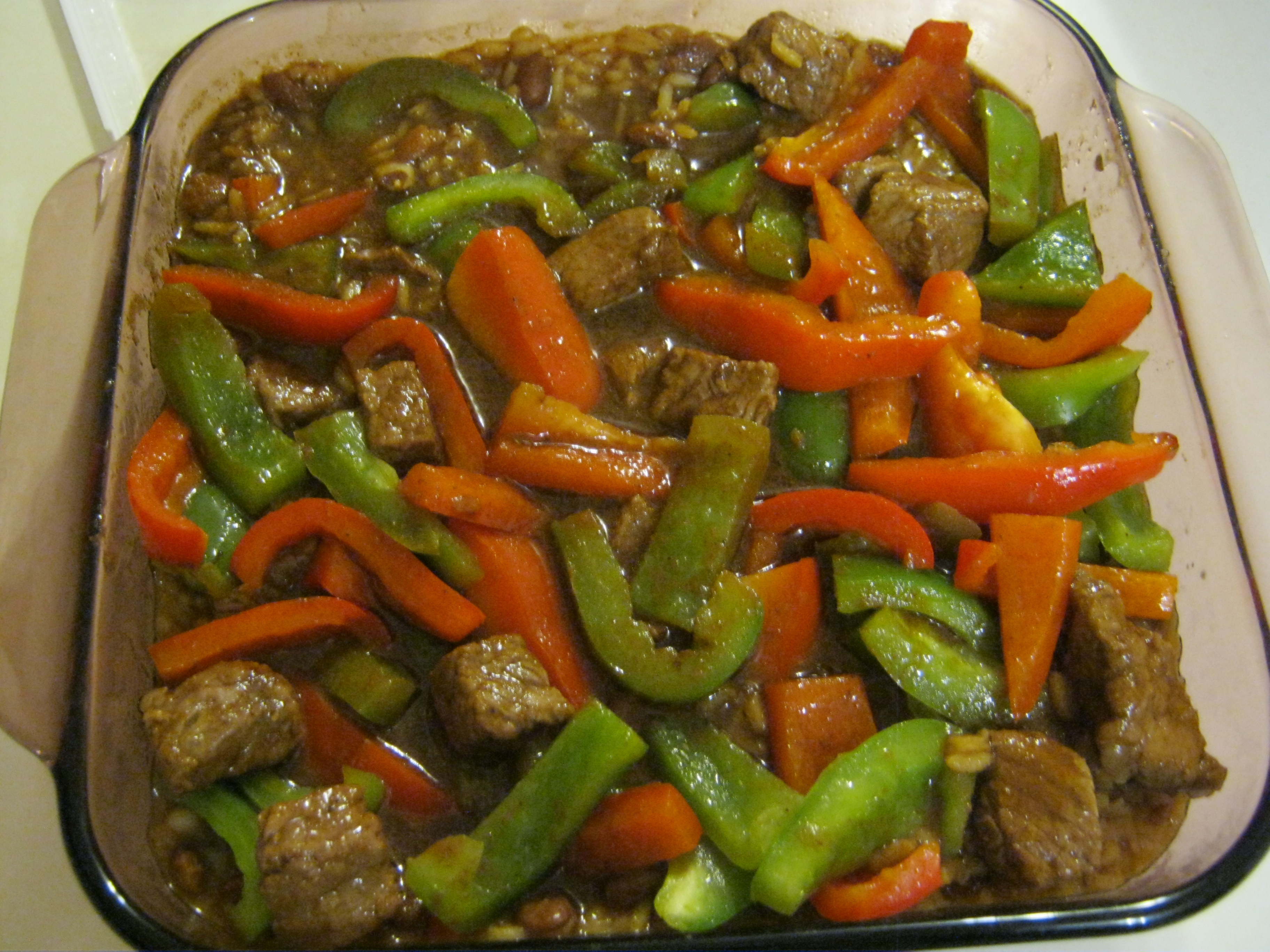
Fajita Rice and Beans
Gather the following ingredients:
Steak
Red pepper
Green pepper
Olive oil
Fajita seasoning packet
Cheddar cheese
Vigo rice and beans
Medium pot with lid
Large frying pan
Glass pan
Preheat oven to 350 degrees.
Cook the rice and beans according to the package directions.
Cut up the steak into nice bite sized pieces. Add a tablespoon of olive oil to the pan. Cook the steak over a medium heat until all sides are browned. Set aside on a plate.
Cut up the red and green peppers. Slice the peppers into long slices. Add a tablespoon of olive oil to the frying pan. Cook the peppers until you can cut them with a spatula.
Add the stead back into the frying pan. Cover in fajita seasoning and a some water. About a forth of a cup.
Cover the bottom of the glass pan with the rice and beans. Top this with the peppers and steak. Sprinkle the cheddar cheese over the top. Cook for 30 minutes.